
Advertisements
Deep Work Focus Time in Open Offices: How I Finally Stopped Losing My Mind
Here’s a stat that honestly made me want to cry. According to a University of California, Irvine study, it takes an average of 23 minutes and 15 seconds to refocus after an interruption. Twenty-three minutes! Now imagine that happening six, seven, maybe ten times a day in your bright, shiny open office.
I’ve been there. I spent three years working in an open-plan office where my desk was basically in the middle of a highway of human traffic. And let me tell you, trying to achieve deep work focus time in that environment felt like trying to meditate at a rock concert. But I figured some things out — the hard way, naturally — and I want to share what actually worked.
Why Open Offices Are Basically the Enemy of Deep Work
Look, I get why companies love open offices. They’re cheaper to build, they look cool on Instagram, and there’s this whole idea that removing walls sparks collaboration. But research from Harvard actually found that face-to-face interactions dropped by about 70% when companies switched to open floor plans. People just started hiding behind their screens and sending more emails instead.
The real problem is cognitive switching. Cal Newport talks about this extensively in his book Deep Work, and honestly, that book changed my whole perspective. Deep work — the kind of focused, uninterrupted concentration that produces your best stuff — requires sustained attention. Open offices are designed, almost perfectly by accident, to destroy that.
I remember one particularly brutal Wednesday where I was trying to finish a quarterly report. Between the guy clipping his nails three desks over (yes, really) and my colleague who apparently needed to narrate every email she read aloud, I got maybe 40 minutes of actual productive work done in an eight-hour day. It was infuriating.
Advertisements
Strategies That Actually Helped Me Find Focus Time
So after months of quiet desperation, I started experimenting. Some things flopped spectacularly. Others were game changers. Here’s what stuck:
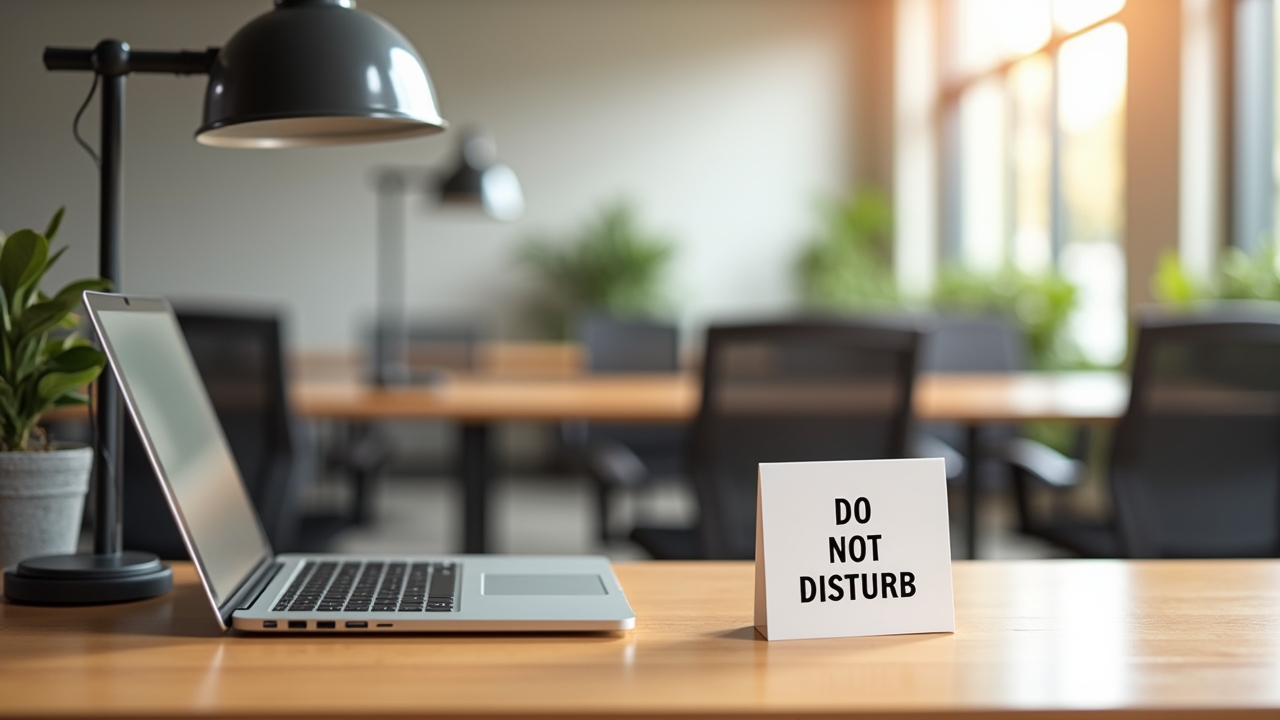
- Time blocking with visible signals. I started blocking 90-minute deep work sessions on my calendar and wearing noise-cancelling headphones during those windows. Even if I wasn’t listening to anything! It became a “do not disturb” signal that most people actually respected.
- Finding the early morning sweet spot. I shifted my schedule to arrive at 7 AM, a full hour before most of my team. That quiet hour was worth more than three afternoon hours, I swear.
- Using ambient noise apps. Apps like Noisli or Coffitivity were lifesavers. They layer background sounds that actually help concentration rather than destroy it.
- The “focus corner” negotiation. I talked to my manager about designating a quiet zone in one corner of the office. It wasn’t fancy — just a couple desks with an understood no-chatting rule. It was approved within a week and used by half the team within a month.
- Batching communication. Instead of responding to Slack messages every three minutes, I started checking them at set intervals. Twice in the morning, twice in the afternoon. Nobody died, I promise.
Getting Your Team and Manager On Board
Here’s where I messed up initially. I tried to do all of this in secret, like some kind of productivity ninja. That backfired because people thought I was being antisocial or checked out. The real breakthrough came when I actually talked to my team about it.
I shared some of the research with my manager — nothing preachy, just a quick “hey, I found this interesting” kind of conversation. Turns out, she was struggling with the same distractions but didn’t think anyone else cared. We ended up implementing team-wide “focus hours” from 9 to 11 AM where interruptions were minimized. Productivity honestly went through the roof.
It’s worth noting that this isn’t about hating your coworkers or avoiding collaboration. It’s about being intentional with your attention, which is probably the most valuable resource you’ve got.
Your Office Doesn’t Have to Win
The open office isn’t going away anytime soon. But your ability to do meaningful, focused work doesn’t have to be a casualty of it. Start small — one focused block tomorrow morning, a pair of headphones, a conversation with your manager. You’d be surprised how much changes when you simply decide to protect your attention.
Want more practical tips on making your work environment actually work for you? Head over to the Stress Free Workplace blog for more posts on productivity, workplace wellness, and reclaiming your sanity at work.